
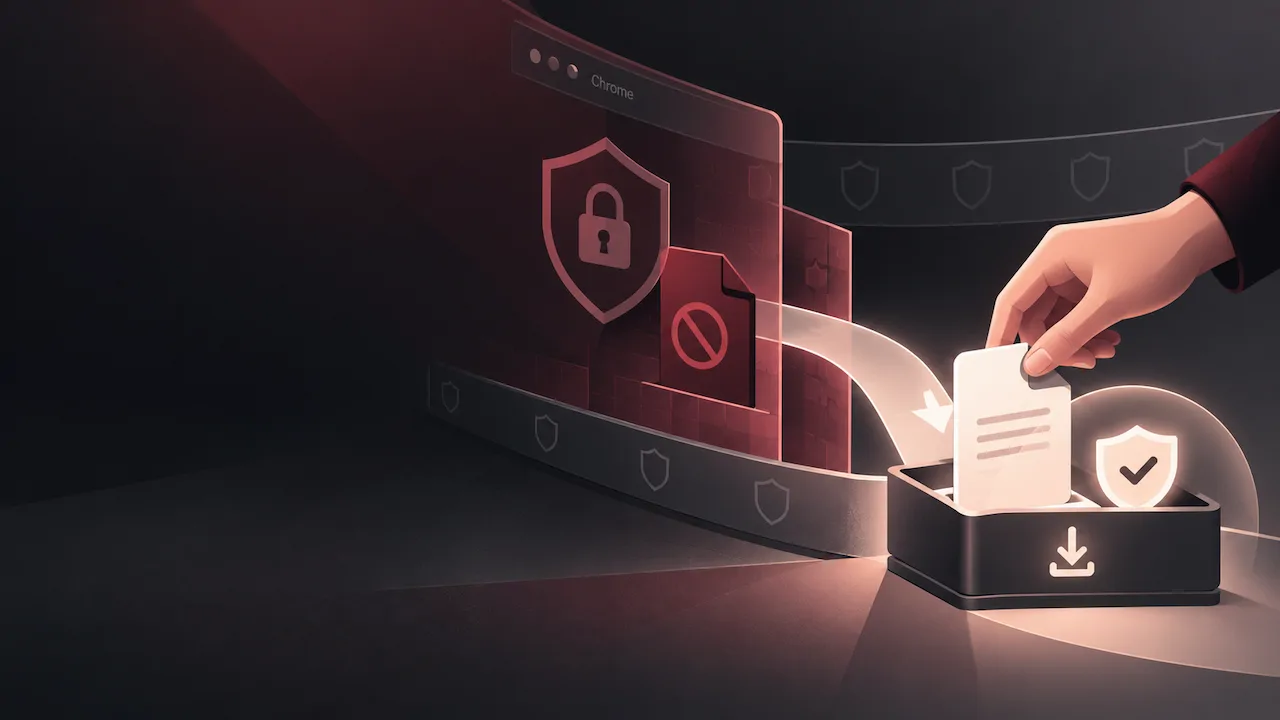
When you encounter chrome blocking downloads, it is usually triggered by Google Chrome's built-in Safe Browsing technology flagging unfamiliar, executable, or compressed files (.exe, .zip, .bat) as potential security risks. To quickly unblock download chrome actions for files you trust, open your download manager at chrome://downloads and select Keep dangerous file or temporarily adjust your security preferences in privacy settings.
Why Chrome Blocks Legitimate Files (False Positives)
Google Safe Browsing analyzes billions of URLs daily to safeguard users from phishing, malware, and unwanted software. However, legitimate files are often blocked due to strict automated heuristic checks and reputation scoring.
- Lack of Digital Signature: Independent developers and open-source projects often distribute executables without expensive code-signing certificates. Chrome flags unsigned binaries by default.
- Low Download Reputation: If an application or update was released recently, Chrome's Safe Browsing database may not have recorded enough download telemetry to classify it as safe.
- Insecure Connections (Mixed Content): Downloading files over an unencrypted HTTP connection from an otherwise secure HTTPS webpage triggers security warnings.
- Archive File Types: Compressed archives (.zip, .rar, .7z) containing script files or installers cannot always be inspected thoroughly without extraction, prompting protective blocks.
As documented in Google Safe Browsing technical guidelines and widely discussed across communities like Reddit, Chrome prioritizes user safety over convenience, resulting in occasional false positives for niche software and developer tools.
Method 1: Unblock Files from the Chrome Download Manager
The safest and fastest way to bypass a blocked file without compromising your general browser security is through the native download manager.
- Press Ctrl + J on Windows/Linux or Cmd + Shift + J on macOS to open the download list (or navigate to
chrome://downloads). - Locate the blocked item displaying the warning "File may be dangerous" or "Suspicious download blocked".
- Click Keep dangerous file (or click the three dots icon and choose Keep).
- A confirmation dialog will appear. Click Keep anyway to finish saving the file to your computer.
Method 2: Manage Safe Browsing Protection Settings
If you routinely download developer builds, custom tools, or internal software, you can adjust Chrome's protection levels to minimize download interruptions. Keeping your google chrome installation up to date ensures you receive the most accurate threat detection models.
- Click the three vertical dots in the top-right corner of Chrome and select Settings.
- Navigate to Privacy and security > Security.
- Under Safe Browsing, review and select your preferred protection mode.
| Protection Mode | How It Handles Downloads | Recommended Use Case |
|---|---|---|
| Enhanced Protection | Proactively scans downloads, sends sample files to Google, and blocks unrecognized risks aggressively. | Best for non-technical users seeking maximum security against zero-day malware. |
| Standard Protection (Default) | Checks URLs and downloads against a continuously updated blacklist; flags known malicious files. | Recommended for everyday browsing and balanced safety. |
| No Protection (Not Recommended) | Disables all download screening and phishing alerts entirely. | Only use temporarily for offline testing or troubleshooting persistent false blocks. |
Note: If you temporarily select "No Protection" to complete an urgent transfer, remember to switch back to Standard Protection immediately afterward.
Method 3: Check Third-Party Software and System Policies
If downloads fail instantly or display "Blocked by administrator" / "Virus scan failed", the block may originate outside Chrome:
- Windows Defender SmartScreen & Antivirus: Security software can intercept and quarantine files during the Chrome saving process. Add temporary exclusions in your antivirus suite if you verify the file's legitimacy.
- Conflicting Extensions: Some adblockers or security add-ons automatically block executable downloads. Try downloading in an Incognito window (Ctrl + Shift + N).
- Corrupted Profile: If all downloads fail unexpectedly, reinstalling your browser via a clean chrome download can resolve damaged profile permissions.
Pre-Download Safety Checklist Before Overriding Warnings
Bypassing browser warnings should always be handled with caution. Follow these verification steps before running any flagged file:

- Inspect the File with VirusTotal: Upload the downloaded executable or archive to VirusTotal to scan it across 70+ antivirus engines.
- Verify Checksums: Compare the SHA-256 or MD5 hash provided by the software developer against the downloaded file hash.
- Verify Source Authenticity: Ensure the domain in your address bar matches the official project repository or publisher site.
FAQ
Why does Chrome say "This file is dangerous, so Chrome has blocked it"?
Chrome displays this message when a file matches known malware signatures, originates from an untrusted domain, or lacks an established download history within Google's Safe Browsing database.
How do I fix Chrome dangerous download blocked on macOS?
Open chrome://downloads, click "Keep dangerous file", and confirm. After downloading, macOS Gatekeeper may also block the file. Open macOS System Settings > Privacy & Security and click "Open Anyway" next to the flagged app.
Can I turn off Safe Browsing permanently?
While you can select "No protection (not recommended)" under Chrome's Privacy and security settings, it is strongly advised against. Disabling protection leaves your browser vulnerable to phishing sites, fraudulent extensions, and malicious scripts.
Why are downloads blocked even in Incognito mode?
Safe Browsing remains active in Incognito mode to protect your session from malware. To save a blocked file while in Incognito, use the `chrome://downloads` page to authorize the specific transfer manually.